Michael Sheldon
Narrative Photography
Galleries
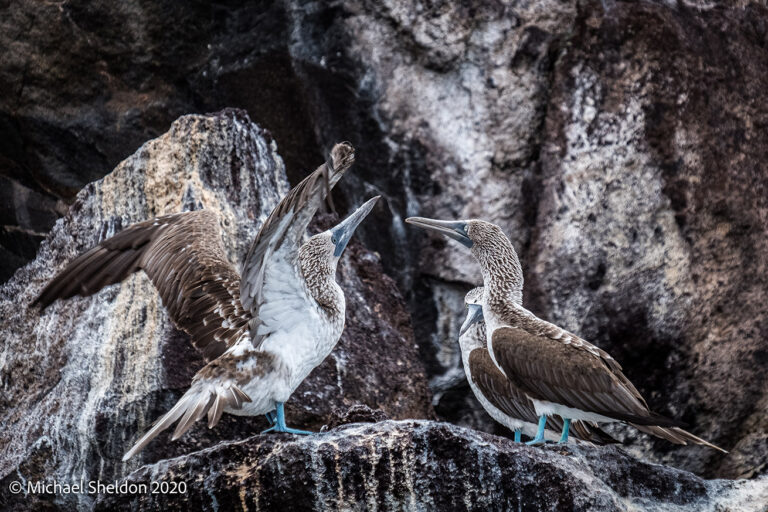
Reveille in Birdland's Birds
This collection is a resource for readers of Reveille in Birdland who may not be familiar with some or all of the species mentioned in the story. Virtually all of my birding has occurred within the otherwise ample confines of North America. As such, two important characters, Tereus (a hoopoe) and Ms. DePasser (a Eurasian tree sparrow) are not included. I hope to add photos of these species in the near future. In the meanwhile, they are easy to find on the internet.
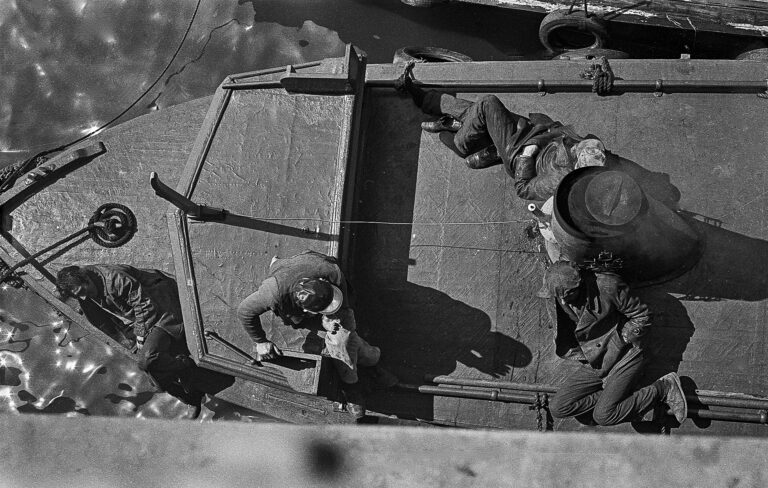
Street Photography
A Nikkormat. A 50 mm lens. A couple rolls of Tri-X. That’s all I needed in my street photography days, wandering almost at random along the byways of New York and Philadelphia. Prior to that: Rome, Florence, and San Gimignano; Paris and Istanbul. Though mostly an urban discipline, the principles of street photography apply anywhere, from the beaches of Atlantic City to the Salisbury plains around Stonehenge. You stalk your quarry, even though you don’t know exactly what you’re looking for. Then you’d better be ready when the moment arrives.
It’s not that different than bird photography.
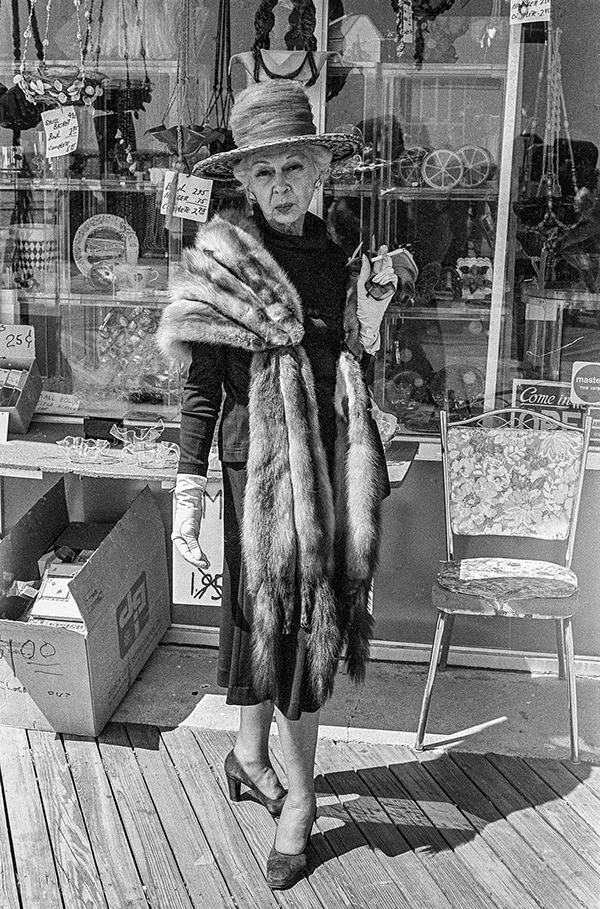
The Family Romance: A novel in postcards
I had been visiting Atlantic City on holidays—to document the town and its denizens prior to the arrival of the casinos. I’d also become the custodian of a box of mostly family photos, many of them going back two or more generations. And a lot of them were set in Atlantic City. Others showed dental students dissecting a corpse; staged military exercises; and vaguely threatening postcards from a former friend of my father’s. What a bonanza!
I made copied the found-photos and invented dialogue to serve as captions for each scene. And there it was; the world’s first photoromance! The Family Romance: A Novel in Postcards.
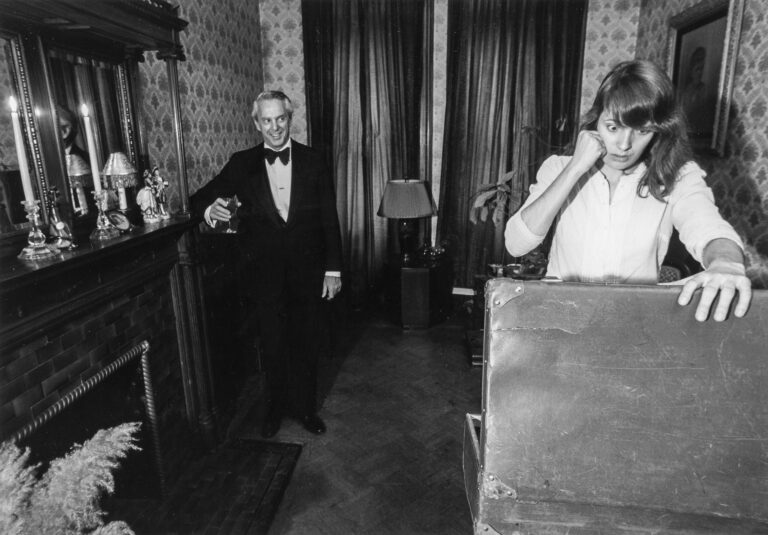
Strømme: The Life of a Suitcase
When my friend Kristin Strømme returned to Norway, leaving behind her colorless cardboard suitcase, I realized that it had “visual indifference”—the characteristic Marcel Duchamp sought out for his readymades. I began photographing it in a variety of archetypal situations that, coincidentally, run parallel to the conventions of genre fiction.
As the life story of a suitcase, we see “Strømme” as a baby, playing childish games, accidentally discovering his parents having sex, triumphing in a western-style gunfight, running the rapids, and finally, returning to Oslo for a phoenix-like conclusion.
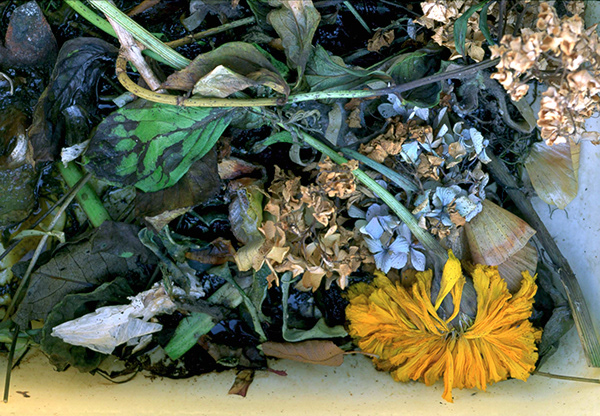
Compost Mandalas
Compost Mandalas is a coda to Strømme, though it may not look like it. I had found an offbeat publisher in Southern California who agreed to publish Strømme. However, my joy turned to frustration as months, and then years, went by and nothing happened. Finally he told me he wanted to rearrange the photos to make them more sequential—like a comic book. So much for my story line and the entire concept behind it.
I said “no thanks,” but concerns remained that he might have an option on future books. What could I send him that would be pointless and easy to produce? At the time our kitchen counter had a drawer with a Rubbermaid tub fitted inside—designed to receive scraps for composting. One day I looked down and realized the contents, without any arrangement, were beautiful. They looked even better photographed outdoors in natural light, using Fujifilm’s Velvia color film.
So there it was, the third photography book: A 52-week Compost Desk Engagement Calendar. The image pictured here, Compost Mandala #39, has turned out to be one of my most sought- after photographs by collectors.
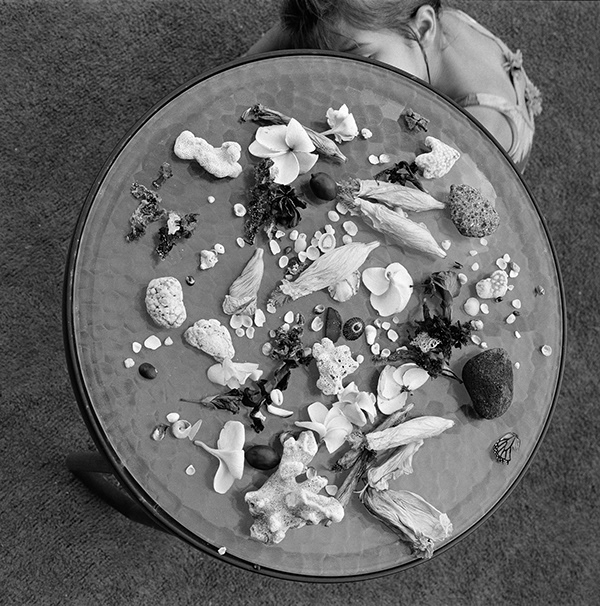
Left Behinds
As a six-year-old, our daughter Giuliana enjoyed playing by herself. She could spend hours making careful arrangements of toys, clothing, or random junk. Then she’d walk away and leave her creations for us to put away. It took some time and mental discipline for us to realize that, instead of messes, it’d be more rewarding to view these assemblages she’d left behind as works of art. Later, I started supplementing the Left Behinds with images taken from a child’s point of view.
Is this truly a photo-novel? In my mind, yes—but call it narrative photography if you prefer.
Subscribe
Subscribe to our quarterly note.
“To Cartier-Bresson it was clear that you take a photo in a fraction of a second; he liked to say, like a thief, like a street merchant that doesn’t have the right to be there and gets thrown out by the police.”
— Agnes Sire, long-time friend and colleague of Cartier-Bresson at Magnum
Sign up to read observations about books, birds, horses, and our place in the natural world. Four times a year, but not on a strict schedule.